Shut In Procedures For Oil & Gas Well Control
Our objective is to cover the shut-in procedures for a surface BOP Stack in case of well control issues & to cover A.P.I. recommendations for these procedures which include advantages and disadvantages.
When any of the positive indications of a kick (check also: Kick warning signs) are observed and a check shows that the well is flowing, it should be shut in immediately. However, If surface casing (check
https://www.drillingmanual.com/iwcf-shut-in-procedures-on-fixed-rig/
Friday, 14 July 2023
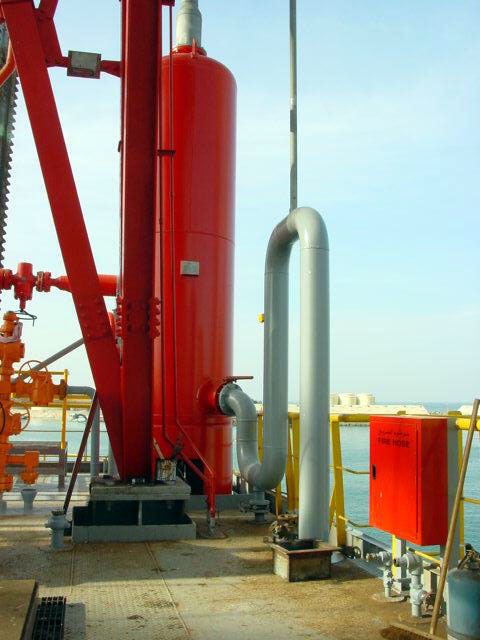
The Most Frequently Asked Questions About Mud Gas Separators
A mud gas separator, also known as a poorboy degasser or oilfield gas buster, is a critical component of drilling operations in the oil and gas industry. Its location is downstream of the choke manifold. This will make it able to separate gas from the drilling fluid. In addition, its design will assist preventing the release of toxic gases and ensuring the safety of the drilling crew and equipment.
https://www.drillingmanual.com/mud-gas-separator-poorboy-buster/
Steerable Downhole Drilling Mud Motors
A steerable downhole drilling mud motors system allows directional changes (azimuth and/or inclination) of the well without tripping pipe to change the Bottom hole Assembly BHA, hence its name. This article is one of the Directional Drilling guide articles I recommend visiting to understand other deflection tool mechanisms.
https://www.drillingmanual.com/steerable-downhole-drilling-mud-motor-systems/
A steerable downhole drilling mud motors system allows directional changes (azimuth and/or inclination) of the well without tripping pipe to change the Bottom hole Assembly BHA, hence its name. This article is one of the Directional Drilling guide articles I recommend visiting to understand other deflection tool mechanisms.
https://www.drillingmanual.com/steerable-downhole-drilling-mud-motor-systems/
Thursday, 13 July 2023
Diverter Drilling System For Well Control Full Guide
The function of a diverter system in oil and gas rigs (Check also types of drilling rigs) is to provide a low-pressure well flow control system to direct controlled or uncontrolled wellbore fluids or gas away from the immediate drilling area for the safety of personnel and equipment involved in the drilling operation. The diverter system is not designed to shut in or halt well flow.
https://www.drillingmanual.com/diverter-procedure-while-drilling-on/
The function of a diverter system in oil and gas rigs (Check also types of drilling rigs) is to provide a low-pressure well flow control system to direct controlled or uncontrolled wellbore fluids or gas away from the immediate drilling area for the safety of personnel and equipment involved in the drilling operation. The diverter system is not designed to shut in or halt well flow.
https://www.drillingmanual.com/diverter-procedure-while-drilling-on/
Bent Sub And Mud Motor In Directional Drilling
The most commonly used technique for changing the trajectory of the wellbore uses a piece of equipment known as a “bent sub,” which is used only in directional well drilling (Figure 1) with a Positive Displacement (mud) motor.
What is The Bent Sub In Directional Drilling
A bent sub (Drilling Subs) is a short length of pipe with a diameter approximately the same as the collars and threaded connections on either end.
https://www.drillingmanual.com/bent-sub-mud-motor-directional-drilling/
The most commonly used technique for changing the trajectory of the wellbore uses a piece of equipment known as a “bent sub,” which is used only in directional well drilling (Figure 1) with a Positive Displacement (mud) motor.
What is The Bent Sub In Directional Drilling
A bent sub (Drilling Subs) is a short length of pipe with a diameter approximately the same as the collars and threaded connections on either end.
https://www.drillingmanual.com/bent-sub-mud-motor-directional-drilling/
Wednesday, 12 July 2023
Hard Shut In Procedure & Lineup In Well Control
For a hard shut-in lineup, the choke remains closed at all times other than during a well control operation. The choke line valves are aligned such that a flow path is open to the choking system with the exception of the choke itself and one choke line valve located near the blow-out preventer BOP stack. When the hard shut-in procedure is selected for closing in the well the blow-out preventer is closed.
https://www.drillingmanual.com/hard-shut-in-procedure-while-drilling/
For a hard shut-in lineup, the choke remains closed at all times other than during a well control operation. The choke line valves are aligned such that a flow path is open to the choking system with the exception of the choke itself and one choke line valve located near the blow-out preventer BOP stack. When the hard shut-in procedure is selected for closing in the well the blow-out preventer is closed.
https://www.drillingmanual.com/hard-shut-in-procedure-while-drilling/
Depth and Geographical Reference Systems
The trajectory of a deviated well must be carefully planned so that the most efficient trajectory is used to drill between the rig and the target location and ensure that the well is drilled for the least amount of money possible. Here we shall understand what is the Depth and Geographical Reference Systems
When planning, and subsequently drilling the well, the position of all points along the well path and therefore the trajectory of the well must be considered in three dimensions.
https://www.drillingmanual.com/depth-geographical-reference-systems/
The trajectory of a deviated well must be carefully planned so that the most efficient trajectory is used to drill between the rig and the target location and ensure that the well is drilled for the least amount of money possible. Here we shall understand what is the Depth and Geographical Reference Systems
When planning, and subsequently drilling the well, the position of all points along the well path and therefore the trajectory of the well must be considered in three dimensions.
https://www.drillingmanual.com/depth-geographical-reference-systems/
Tuesday, 11 July 2023
Soft Shut In Procedure On Fixed & Floating Rigs
Soft Shut-in Drilling Definition & Lineup
Soft shut-in is one of the procedures of closing wells after it gains a kick to its wellbore. For a soft close-in, a choke is left open at all times other than during a well control operation. The choke line valves are aligned such that a flow path is open through the choking system, with the exception of one choke line valve located near the blowout preventer.
https://www.drillingmanual.com/soft-shut-in-procedure-while-on-fixed/
Soft Shut-in Drilling Definition & Lineup
Soft shut-in is one of the procedures of closing wells after it gains a kick to its wellbore. For a soft close-in, a choke is left open at all times other than during a well control operation. The choke line valves are aligned such that a flow path is open through the choking system, with the exception of one choke line valve located near the blowout preventer.
https://www.drillingmanual.com/soft-shut-in-procedure-while-on-fixed/
Two Stage Cementing | Multi Stage Operations
This article describes in detail the correct procedures for two-stage cementing or multi-stage / multistage Primary cementing operations in oil and gas wells. Of course, these procedures come after the casing running operations and single stage casing cementing operations
What Is Multistage / Multi Two Stage Cementing
The overpressures from a primary cementing column in any casing string type annulus, especially for long casing strings, may be too high for the formation, and as a result mud
https://www.drillingmanual.com/dual-or-second-stage-cementing/
This article describes in detail the correct procedures for two-stage cementing or multi-stage / multistage Primary cementing operations in oil and gas wells. Of course, these procedures come after the casing running operations and single stage casing cementing operations
What Is Multistage / Multi Two Stage Cementing
The overpressures from a primary cementing column in any casing string type annulus, especially for long casing strings, may be too high for the formation, and as a result mud
https://www.drillingmanual.com/dual-or-second-stage-cementing/
Monday, 10 July 2023
Gas Kick Behaviour, Migration & Expansion
In well control, the gas kick is simply to be detected once enter wellbore in water base mud as once driller (driller job description) shut in the well, the SICP & SIDP start to increase slowly with the same values due to gas migration. Of course, it may be difficult to notice such migration in oil-base mud as the gas solubility is higher in such medium.
https://www.drillingmanual.com/gas-kick-behavior-expansion-migration-well-control/
In well control, the gas kick is simply to be detected once enter wellbore in water base mud as once driller (driller job description) shut in the well, the SICP & SIDP start to increase slowly with the same values due to gas migration. Of course, it may be difficult to notice such migration in oil-base mud as the gas solubility is higher in such medium.
https://www.drillingmanual.com/gas-kick-behavior-expansion-migration-well-control/
Casing Running Procedures Good Practice
The casing is mandatory in drilling operations as it has a lot of casing functions to prevent cave-in of unconsolidated formations, isolate problem zones, and many more. As mentioned before in our casing design guide the selection of casing depends on many factors. Here in this article, we shall learn everything about the drilling best practice for casing running procedures, tools & equipment.
https://www.drillingmanual.com/casing-running-procedures-equipment-tool/
The casing is mandatory in drilling operations as it has a lot of casing functions to prevent cave-in of unconsolidated formations, isolate problem zones, and many more. As mentioned before in our casing design guide the selection of casing depends on many factors. Here in this article, we shall learn everything about the drilling best practice for casing running procedures, tools & equipment.
https://www.drillingmanual.com/casing-running-procedures-equipment-tool/
Sunday, 9 July 2023
Kick Warning Signs, Positive Indicators & 1st Action
The alertness in determining Kick early warning signs in well control is of the uppermost importance to wellbore safety. Careful observance and positive reaction to these signs will keep the well under control and prevent the occurrence of a well flow situation. In this article we will discuss also the positive indicators for oil well kicks.
The major kick warning signs includes the following:
- Kick Early Warning Signs
- Drilling Break (
https://www.drillingmanual.com/iwcf-kick-early-warning-signs/
The alertness in determining Kick early warning signs in well control is of the uppermost importance to wellbore safety. Careful observance and positive reaction to these signs will keep the well under control and prevent the occurrence of a well flow situation. In this article we will discuss also the positive indicators for oil well kicks.
The major kick warning signs includes the following:
- Kick Early Warning Signs
- Drilling Break (
https://www.drillingmanual.com/iwcf-kick-early-warning-signs/

Drilling Rig Floorhand In Oil & Gas
What is a Drilling Rig Floorhand?
A drilling floorhand job is essential in the oil and gas rig industry. This entry-level position is a crucial part of a drilling crew, responsible for assisting in drilling equipment operations and maintenance on the rig floor. The floorhand duties & job description includes performing various manual labor tasks in oil rigs.
https://www.drillingmanual.com/drilling-rig-floorhand-oil-duties/
Casing running - installation patterns
Oilfield drilling
Casing Running
Take into your considerations:
- Good practice when unloading cement is to blow the first few sacks of cement through the lines in order to prevent moisture contaminated cement from collecting in the tanks. Off-loaded cement should be blown into empty, clean tanks.
- If possible, avoid storing cement for long periods. Alternate tank usage systematically and check them.
https://www.drillingmanual.com/casing-running-installation-patterns/
Oilfield drilling
Casing Running
Take into your considerations:
- Good practice when unloading cement is to blow the first few sacks of cement through the lines in order to prevent moisture contaminated cement from collecting in the tanks. Off-loaded cement should be blown into empty, clean tanks.
- If possible, avoid storing cement for long periods. Alternate tank usage systematically and check them.
https://www.drillingmanual.com/casing-running-installation-patterns/
Saturday, 8 July 2023
Well Kicks Guide While Drilling Oil & Gas Wells
1) OBJECTIVES
The objectives of this section are to Highlight the Causes of Kicks and Influxes.
2) INTRODUCTION
Primary control is defined as using the drilling fluid to control formation fluid pressure. The drilling fluid has to have a density that will provide sufficient pressure to overbalance pore pressure. If this overbalance is lost, even temporarily then formation fluids can enter the wellbore. Preventing the loss of primary control is of the utmost importance.
https://www.drillingmanual.com/iwcf-introduction-to-well-kicks/
1) OBJECTIVES
The objectives of this section are to Highlight the Causes of Kicks and Influxes.
2) INTRODUCTION
Primary control is defined as using the drilling fluid to control formation fluid pressure. The drilling fluid has to have a density that will provide sufficient pressure to overbalance pore pressure. If this overbalance is lost, even temporarily then formation fluids can enter the wellbore. Preventing the loss of primary control is of the utmost importance.
https://www.drillingmanual.com/iwcf-introduction-to-well-kicks/
Casing Running Checklist and Cementing Preparation
Casing Check List
Within a reasonable time prior to the beginning of the casing running operation, the Company Drilling and Completion Supervisor and the Drilling Contractor's Tool pusher shall physically check the availability on the rig of all materials necessary to operations. Below we will provide you with the casing running checklist to help you while its job.
https://www.drillingmanual.com/casing-running-checklist-cementing-preparation/
Casing Check List
Within a reasonable time prior to the beginning of the casing running operation, the Company Drilling and Completion Supervisor and the Drilling Contractor's Tool pusher shall physically check the availability on the rig of all materials necessary to operations. Below we will provide you with the casing running checklist to help you while its job.
https://www.drillingmanual.com/casing-running-checklist-cementing-preparation/
Friday, 7 July 2023
Causes of Kick in Drilling | Major 7 factors
When a well gain a kick, it is a big loss as drilling supervisor and crew had to waste a lot of time trying to kick it out from the well. In this article, we shall learn the major 7 causes for kick in drilling oil and gas wells. As you got to this page, you might be interested for our advanced well control guide.
Major Kick Causes While Drilling Oil & GAs Wells
In general, the main causes of kicks while drilling are:
- Improper monitoring of pipe movement (drilling assembly and casing).
https://www.drillingmanual.com/causes-of-kicks-and-influxes/
When a well gain a kick, it is a big loss as drilling supervisor and crew had to waste a lot of time trying to kick it out from the well. In this article, we shall learn the major 7 causes for kick in drilling oil and gas wells. As you got to this page, you might be interested for our advanced well control guide.
Major Kick Causes While Drilling Oil & GAs Wells
In general, the main causes of kicks while drilling are:
- Improper monitoring of pipe movement (drilling assembly and casing).
https://www.drillingmanual.com/causes-of-kicks-and-influxes/
30" Conductor Pipe Hammering & Running Procedure
Material Requirements
The following materials shall be available on the rig upon arrival on location:
- 30" conductor casing pipes as per the Drilling Program (squnch joints, rapid lock connectors or welded preparation).
- Pile hammer.
- Equipment for handling joints.
- Welding machine, if using welded connections.
- 26" bits.
- 26" stabs as per the BHA program.
- 20" casing.
- 20" casing equipment (shoe, etc.).
- Plate for 5" DP (inner-string).
- 20" cementing plug (for emergency).
https://www.drillingmanual.com/30-cp-driving-procedure/
Material Requirements
The following materials shall be available on the rig upon arrival on location:
- 30" conductor casing pipes as per the Drilling Program (squnch joints, rapid lock connectors or welded preparation).
- Pile hammer.
- Equipment for handling joints.
- Welding machine, if using welded connections.
- 26" bits.
- 26" stabs as per the BHA program.
- 20" casing.
- 20" casing equipment (shoe, etc.).
- Plate for 5" DP (inner-string).
- 20" cementing plug (for emergency).
https://www.drillingmanual.com/30-cp-driving-procedure/
Thursday, 6 July 2023
Gas Kick Behaviour, Migration & Expansion
Gas Kick Behaviour, Migration & Expansion
https://www.drillingmanual.com/gas-kick-behavior-expansion-migration-well-control/
In well control, the gas kick is simply to be detected once enter wellbore in water base mud as once driller (driller job description) shut in the well, the SICP & SIDP start to increase slowly with the same values due to gas migration.
https://www.drillingmanual.com/gas-kick-behavior-expansion-migration-well-control/
Fundamental Principles Of IWCF Well Control
Objective
The objectives of this section are to introduce the Fundamental Principles of Well Control.
General Information
The function of Well Control can be conveniently subdivided into three main categories, namely PRIMARY WELL CONTROL, SECONDARY WELL CONTROL, and TERTIARY WELL CONTROL. These categories are briefly described in the following paragraphs.
https://www.drillingmanual.com/iwcf-fundamental-principles-of-well/
Objective
The objectives of this section are to introduce the Fundamental Principles of Well Control.
General Information
The function of Well Control can be conveniently subdivided into three main categories, namely PRIMARY WELL CONTROL, SECONDARY WELL CONTROL, and TERTIARY WELL CONTROL. These categories are briefly described in the following paragraphs.
https://www.drillingmanual.com/iwcf-fundamental-principles-of-well/
Subscribe to:
Posts (Atom)